
Score breakdown
Updated Aug 28, 2026Squibler blends AI writing with the project structure novelists need to finish long works — outlines, goals, and organization. We tested it on a longer project.
What is Squibler?
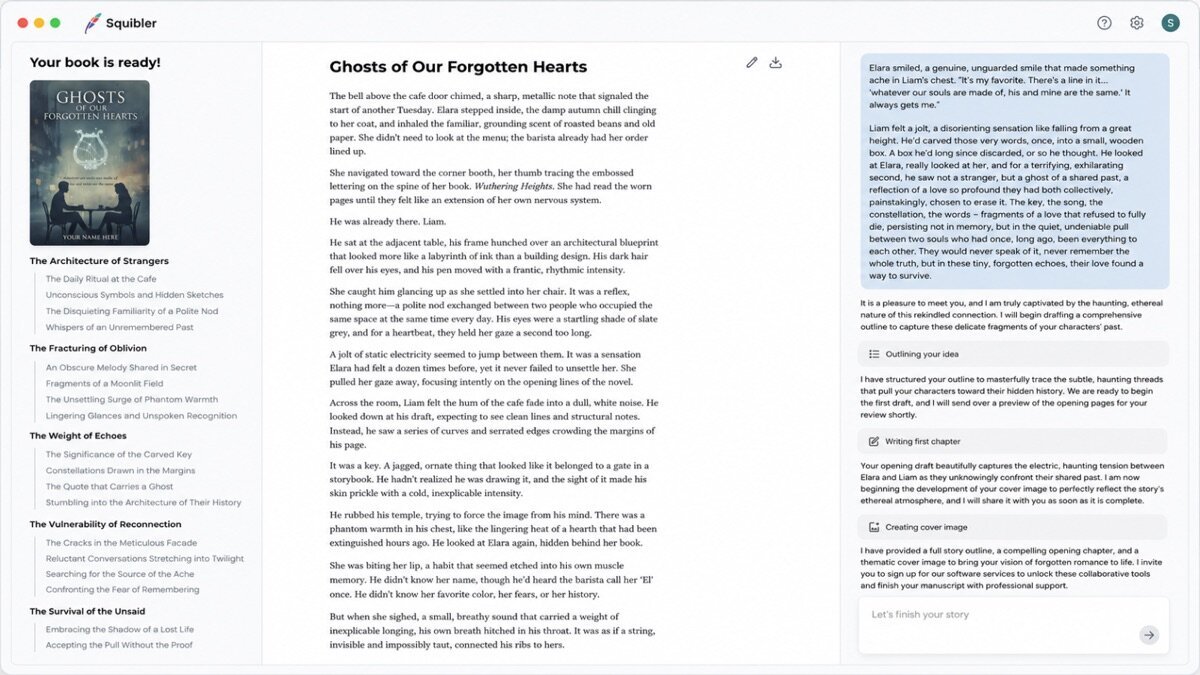
Squibler is a novel and screenplay writing platform with AI drafting plus organizational tools: story elements, outlines, writing goals, and templates. It targets writers who need structure and momentum to complete long projects.
What Squibler does well
Structure & organization
Outlines, story elements, and templates keep long projects organized — its main advantage over pure AI writers.
AI drafting
It generates and expands prose within your structure, helping beat the blank page.
Goals and momentum
Writing goals and progress tracking help writers actually finish, not just start.
Where it falls short
Its raw AI prose quality trails Sudowrite, and the all-in-one approach means no single feature is best-in-class. It is about finishing books, not the finest sentences.
Squibler hands-on
The structure tools genuinely helped keep a longer project organized and moving, and the goal tracking was motivating. AI prose was decent but a step below Sudowrite. For writers who struggle to finish, the organization is the real value.
How Squibler scored on our rubric
Squibler pricing
Squibler has a limited free tier and paid plans from around $16/month. For the combination of AI drafting and novel-project organization, it is reasonably priced.
Who should (and shouldn’t) use Squibler
Buy it if you need structure and momentum to finish a novel or script, with AI help built in.
Skip it if you want the best AI fiction prose — Sudowrite writes better.
Squibler alternatives
Full ranking: best AI fiction writing tools.
What’s new in Squibler for 2026
Squibler has improved its Smart Writer AI, refined outlining and story-element organization, and added goal-tracking and cleaner exports. The emphasis remains on helping writers structure and actually finish long projects, with AI drafting as a supporting feature rather than the whole show.
Getting the most out of Squibler
- Outline the whole project first — structure is Squibler’s strength.
- Track characters and settings in story elements for consistency.
- Set writing goals and use progress tracking to keep momentum.
- Draft with the AI, then edit heavily for voice.
- Export to a clean manuscript when you are done.
Squibler in practice: finishing a draft
We ran a longer project through Squibler and the structure tools — outline, story elements, goals — kept it organized and moving in a way a blank document never does. The Smart Writer produced decent draft prose, a step below Sudowrite, but the real value was momentum: goal tracking nudged us to keep writing. For anyone who starts books but struggles to finish, that is the point.
Squibler for different use cases
- Novelists needing structure: Outlines and elements to organize a book.
- Screenwriters: Structured script projects.
- Goal-driven writers: Progress tracking to hit targets.
- Self-publishers: Organized drafting through to export.
How Squibler compares
| Tool | Best for | Starts at | Our score |
|---|---|---|---|
| Squibler | Structured writing | $16/mo | 8.0 |
| Sudowrite | Fiction prose | $19/mo | 8.9 |
| Novelcrafter | Long-novel organization | $8/mo | 8.3 |
Is Squibler worth it?
At around $16/month with a limited free tier, Squibler is fairly priced for a tool that combines AI drafting with real project organization. Its prose is not the best, so if quality is your priority Sudowrite wins; but if structure and finishing are what hold you back, the organization is worth the money.
Squibler FAQ
The verdict
Squibler is the pick for writers who need organization to finish long projects, with AI drafting along the way. Its prose is not the best, but its structure keeps books moving. We score it 8 out of 10.