
Score breakdown
Updated Aug 28, 2026Play.ht offers one of the largest AI voice libraries plus a developer-friendly API, making it a favorite for both creators and builders. We tested its voices and workflow.
What is Play.ht?
Play.ht (PlayAI) is an AI voice platform with a very large library of voices and languages, voice cloning, and a robust text-to-speech API. It suits podcasters, creators, and developers embedding TTS into apps.
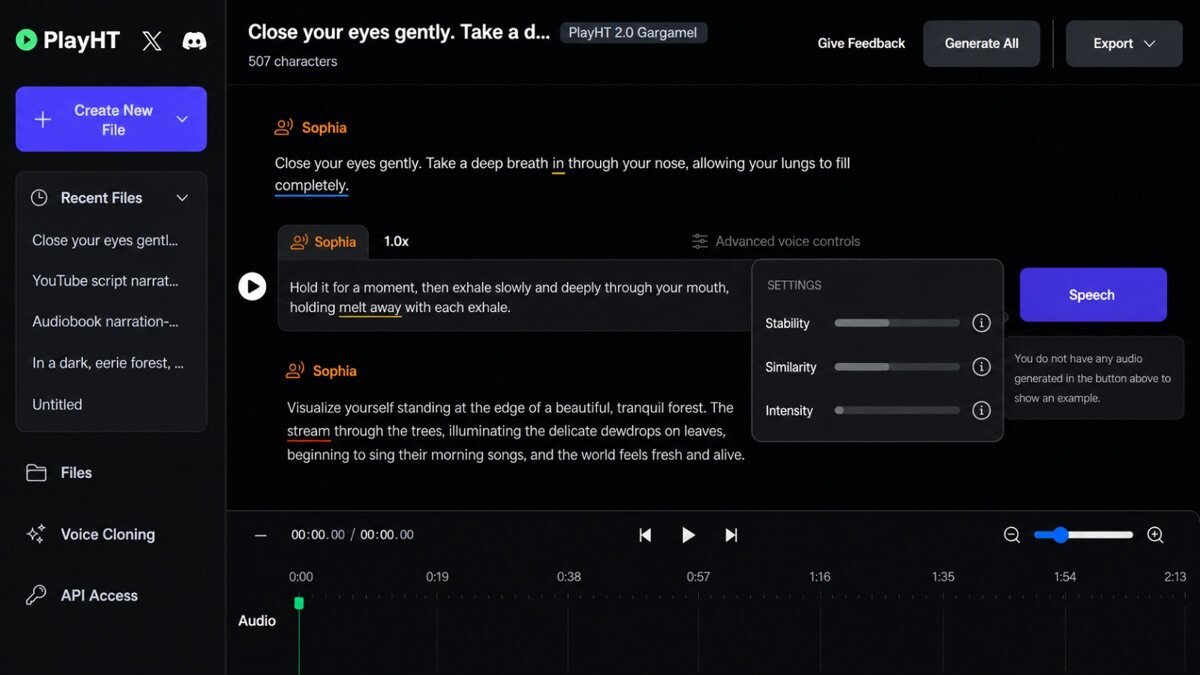
What Play.ht does well
Huge voice library
One of the widest ranges of voices and languages available, so you can match almost any style or accent.
Developer API
A solid TTS API makes it a go-to for building voice into products and automations.
Voice cloning
Custom voice cloning for consistent brand narration.
Where it falls short
Top-end realism is very good but a shade behind ElevenLabs, and pricing is higher at entry. The sheer number of voices can be overwhelming to sift through.
Play.ht hands-on
The library breadth was the standout — we found fitting voices fast across styles, and the API worked cleanly in a quick test. Realism was strong, if just behind ElevenLabs. For range and developer use, Play.ht is excellent.
How Play.ht scored on our rubric
Play.ht pricing
Play.ht has a free tier and paid plans from around $31/month, plus API pricing for developers. For its library breadth and API, it is fair value, though entry pricing is higher than some rivals.
Who should (and shouldn’t) use Play.ht
Buy it if you want a huge voice library or a TTS API for building voice into products.
Skip it if you just want the single most realistic voice — ElevenLabs leads there.
Play.ht alternatives
Full ranking: best AI voice generators.
What’s new in Play.ht for 2026
Play.ht (PlayAI) has improved model realism, grown an already-huge voice library, and invested heavily in a low-latency streaming API for real-time voice applications. Voice cloning has improved, and features aimed at podcasts and long-form audio round it out. Its trajectory is increasingly developer-and-scale focused, complementing its creator library.
Getting the most out of Play.ht
- Explore the library breadth to match almost any voice or accent.
- Use the streaming API for real-time voice in apps and agents.
- Clone a voice for consistent brand narration.
- Test several voices on the same line before committing.
- Lean on it when variety or programmatic access matters most.
Play.ht in practice
The standout in testing was breadth — we found fitting voices quickly across styles and accents, more range than any single competitor offered. A quick API test streamed audio cleanly, confirming why developers reach for it. Realism was strong, a shade behind ElevenLabs, but for projects needing lots of voice options or programmatic generation, Play.ht was the most flexible tool we tried.
Play.ht for different use cases
- Podcasts & long audio: A wide library and long-form support for spoken content.
- Developers & apps: A robust, low-latency API for building voice into products.
- Multilingual content: Broad language and accent coverage.
- Voiceover variety: Many styles to match different brands and moods.
How Play.ht compares
| Tool | Best for | Starts at | Our score |
|---|---|---|---|
| Play.ht | Library & API | $31/mo | 8.3 |
| ElevenLabs | Realism & cloning | $5/mo | 9.2 |
| Murf | Studio workflow | $19/mo | 8.5 |
Is Play.ht worth it?
At around $31/month, Play.ht’s entry price is higher than ElevenLabs, and its top-end realism is a shade behind. What you pay for is breadth and a strong API — so it is excellent value if you need lots of voice variety or are building TTS into a product, and less compelling if you just want the single best-sounding voice.
Play.ht FAQ
The verdict
Play.ht is the best pick for voice variety and API access. Realism trails ElevenLabs slightly, but for range and building TTS into products, it is a top choice. We score it 8.3 out of 10.